Y-Cables:
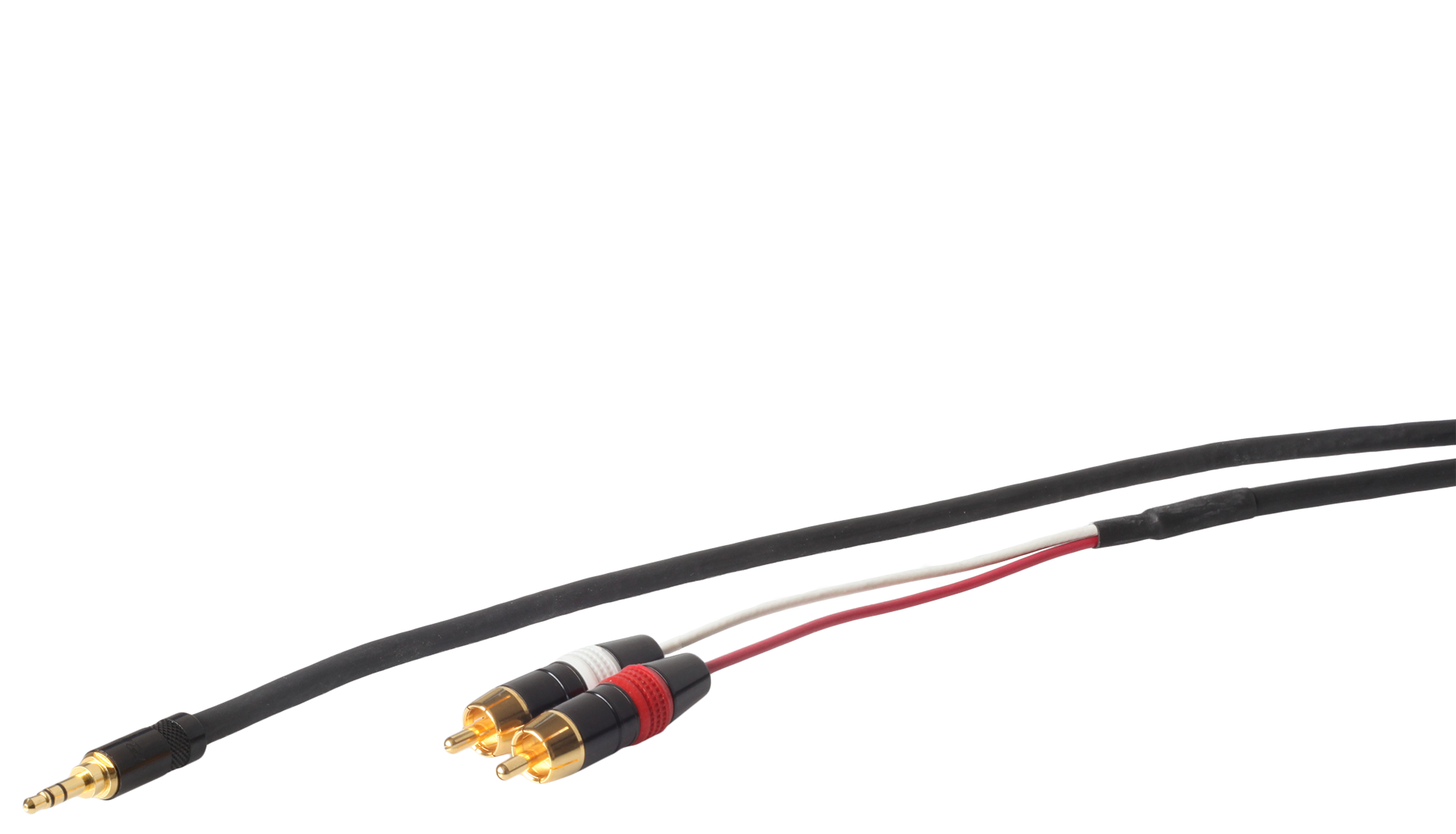
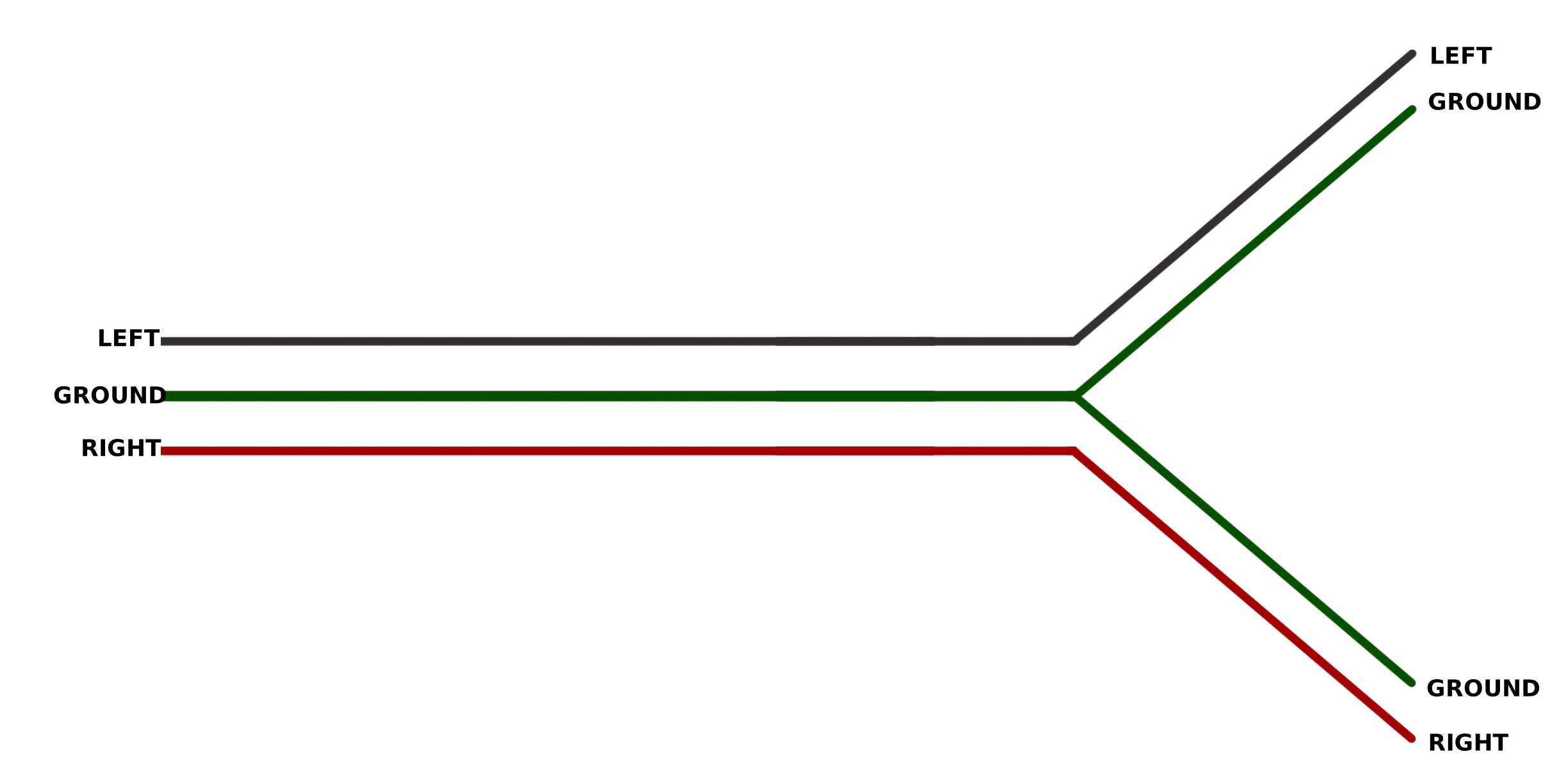
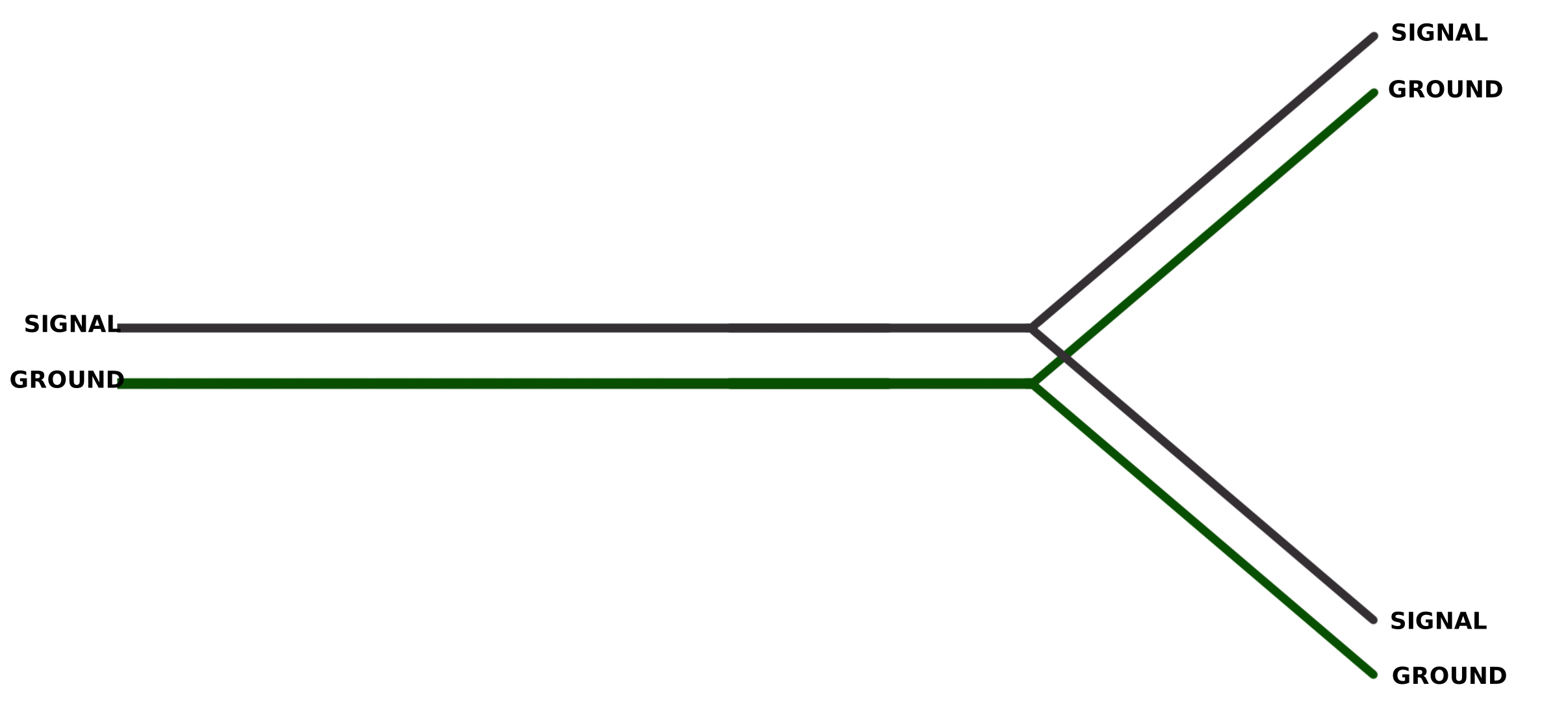
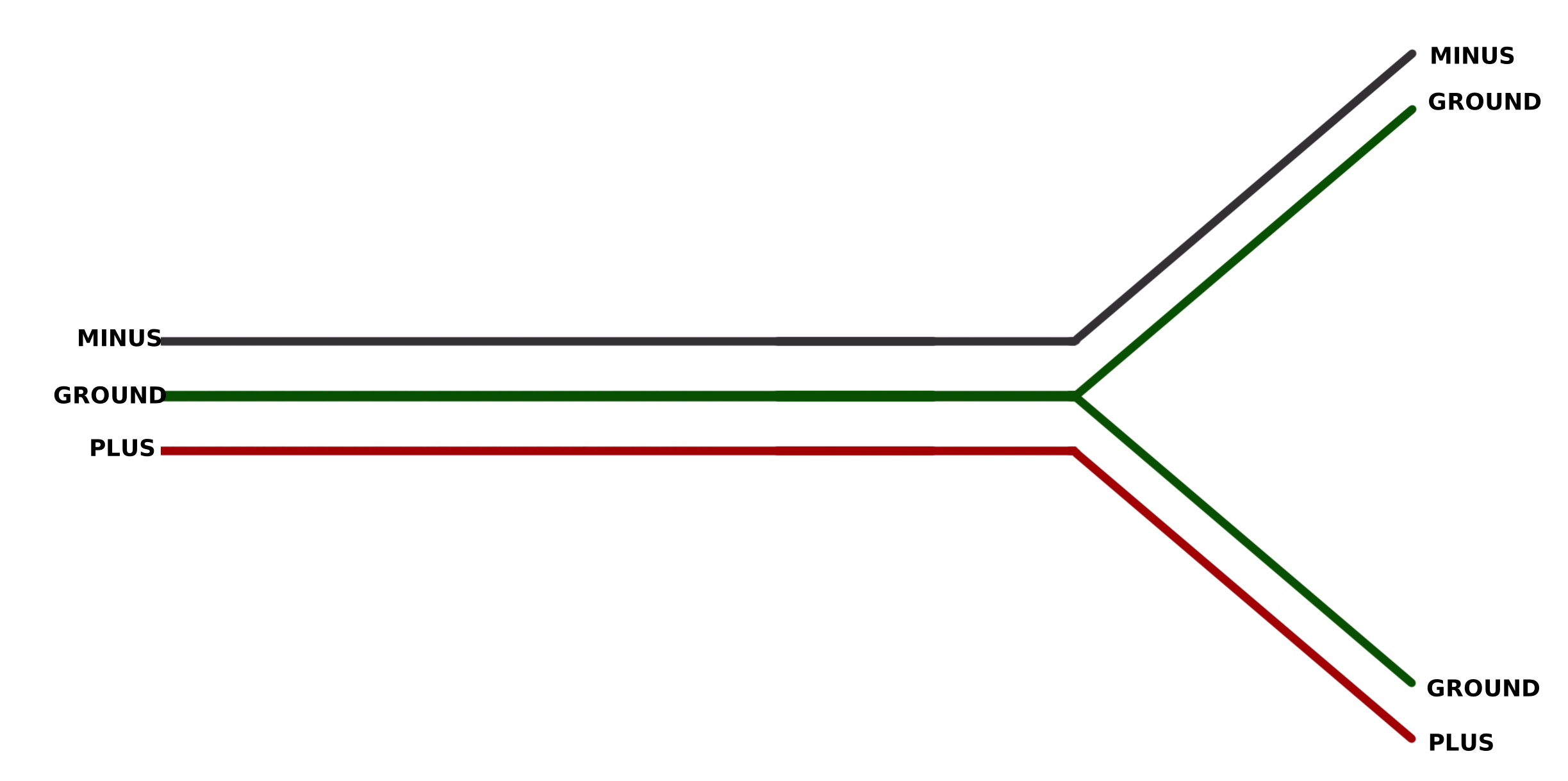
While there's a bit of ambiguity in the manner in which some people use the expression "Y-cable," what we mean by the term is simply -- and only -- a cable which takes a single-channel unbalanced audio connection and connects it to two outputs (or, of course, combines it from two inputs, though that's less common in home audio). If you need a balanced Y-cable for an XLR-type connection, see our balanced audio department; MSA-1 is not suited for that application.
Signal Level Loss from Y-Cables: Almost Nothing
It's common for people to assume that if one splits an output into two inputs, the level of the signal at those inputs will be halved. That's true in impedance-matched circuits, but most consumer unbalanced audio connecctions are a low-impedance output running into a high-impedance input. In such a situation, the amount of signal level lost is negligible (exactly how negligible will depend on the particular impedance characteristics of the circuits involved). Think of it a bit like water pressure: when you turn on your garden hose, it causes a pressure drop throughout the system, but the supply capacity of that system is so high relative to the load you are placing on it that your next-door neighbor's loss of pressure will be too low to notice. Because of the high input impedance, the load devices draw very little current, which results in very little voltage drop.




 MSA-1 Special Applications
 More Details:
 More Details:
  More Details: