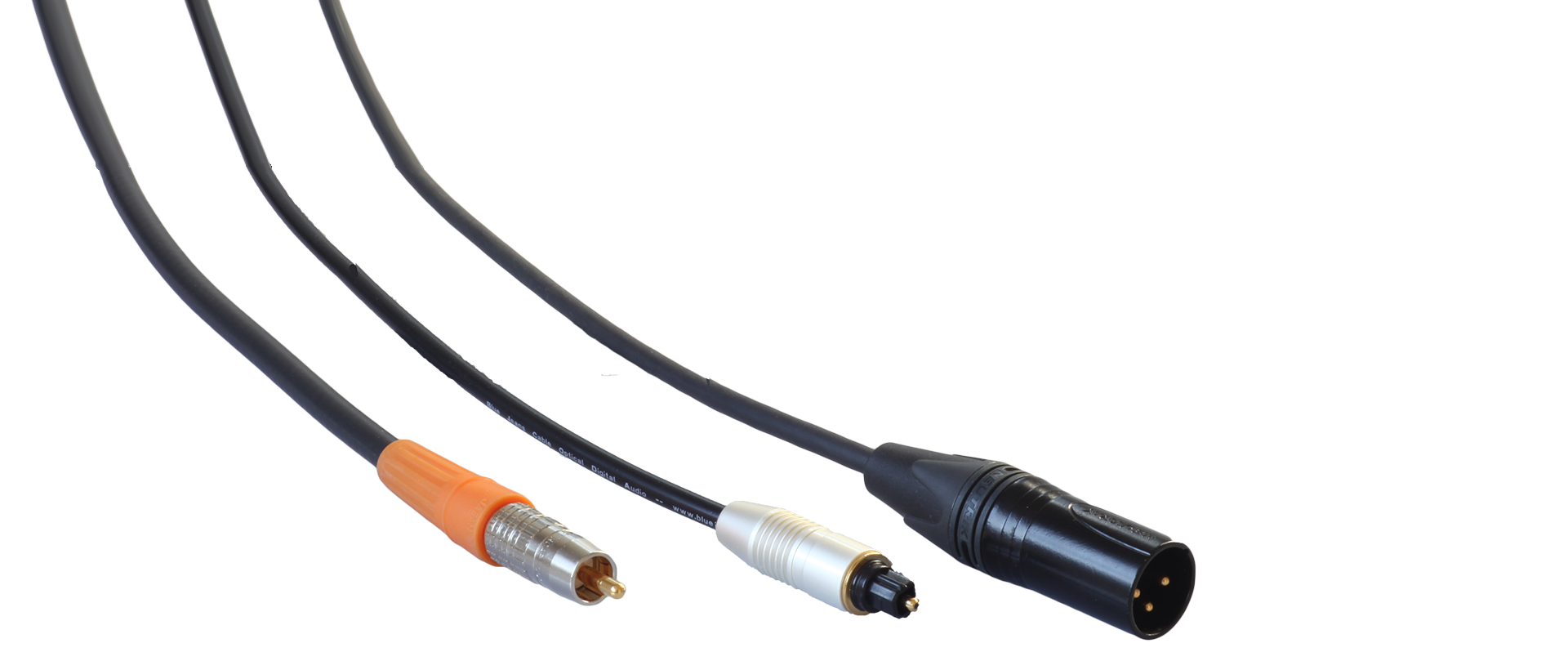
Digital Audio Cable We offer digital audio cables for S/PDIF (RCA or BNC), TOSlink (Optical), and AES/EBU (XLR) applications, using the best broadcast-quality materials and practices.
✖ Coaxial Digital Audio Cable:
✖Optical Digital Audio Cable:
✖ AES/EBU Cable:
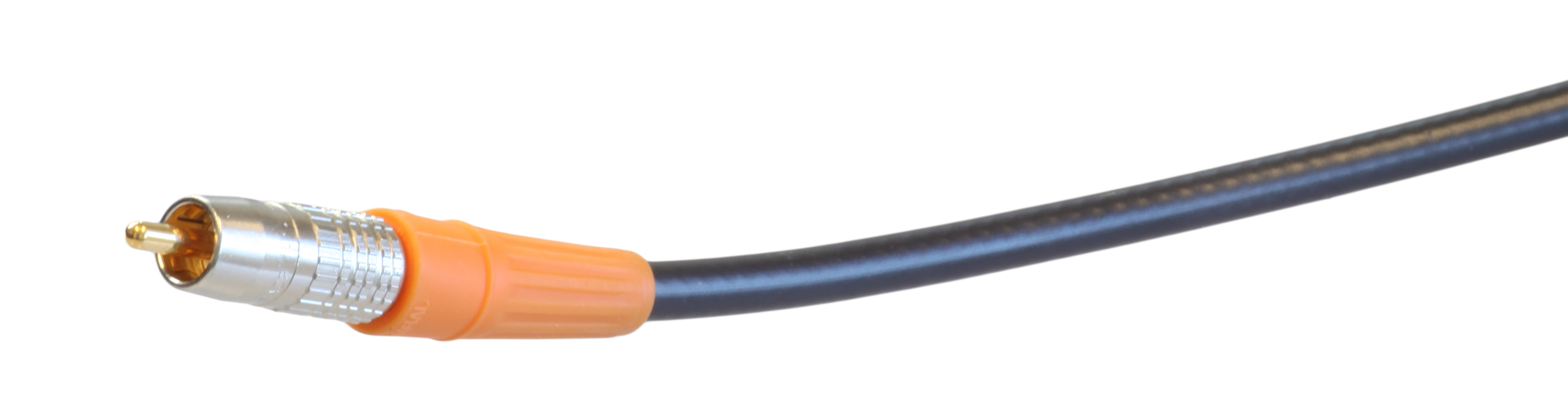
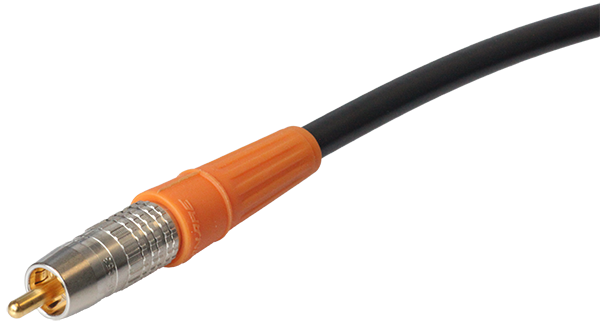
S/PDIF: Made from high-bandwidth precision coaxial cable stock, together with Canare's quality RCA plugs for the best impedance consistencyS/PDIF: Audio Cable from Video Coax
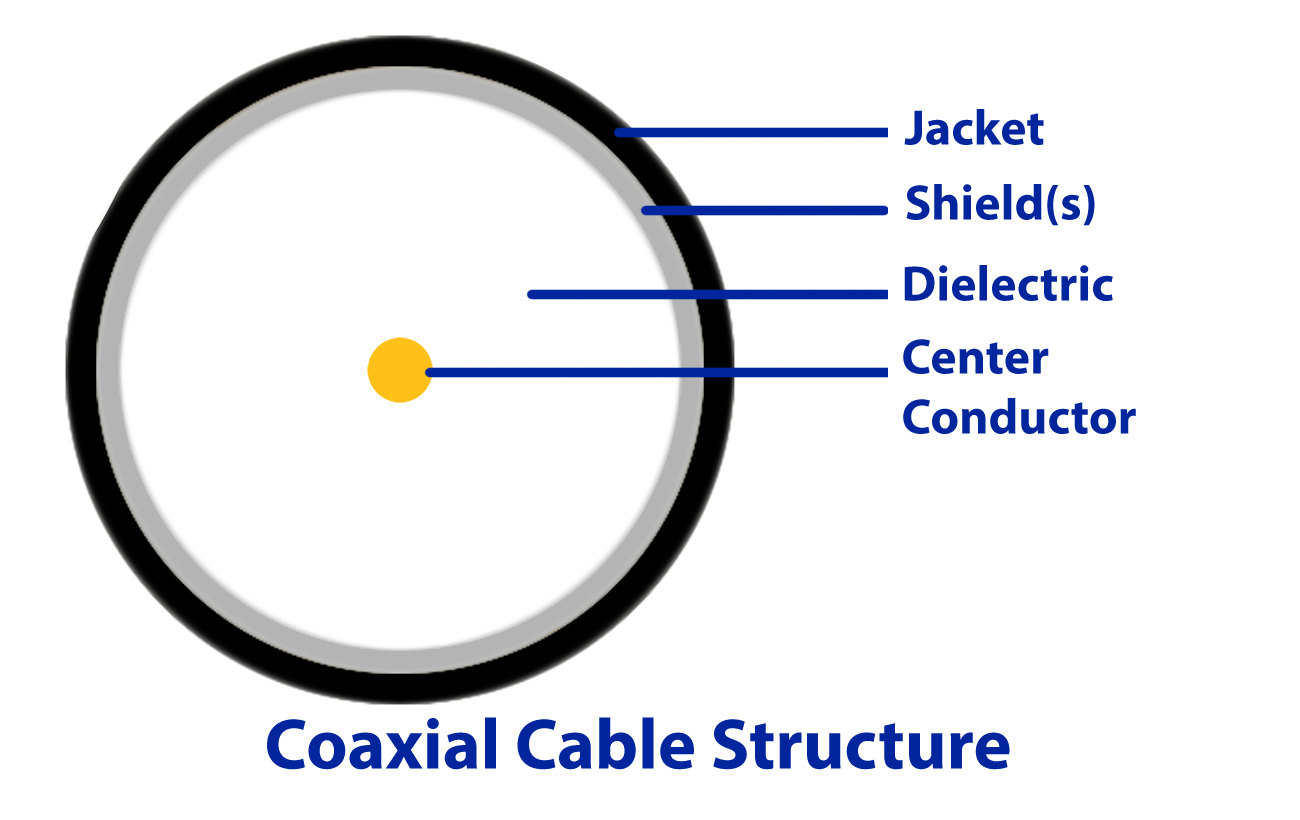
S/PDIF (Sony/Philips Digital Interface) is derived from the professional digital audio signal standard, AES/EBU. Where AES/EBU signals are ordinarily run on balanced audio cable, S/PDIF is run unbalanced, on coaxial cable. Since 75 ohm coaxial cables are already common in the broadcast market, S/PDIF was designed to run on those, usually but not always with RCA terminations.
As signals for 75 ohm coax go, S/PDIF isn't terribly challenging. The signal itself never runs to more than about 12 MHz; being a digital signal, it does contain sharp transitions, and these transitions require a bit more bandwidth than that to be carried faithfully; a true square wave consists of the fundamental frequency plus a series of odd harmonics, so it's nice if the cable handles the first couple of these well: up to 36 MHz for the third and 60 MHz for the fifth. Low return loss within the relevant frequency range means faithful carriage of those sharp digital transitions, making it easy for the receiving circuit both to clock and to interpret the datastream. Conveniently, the broadcast industry's need for 75 ohm video cable for digital video signals (SDI) has led to a generation of coaxes with extraordinary bandwidth, far greater than that.
Our Standard: Canare L-4.5CHD
Our recommended S/PDIF cable for most applications is Canare L-4.5CHD. This cable is suited for 12G SDI -- far beyond the bandwidth required for S/PDIF. The shielding is a dense tinned copper braid laid over an aluminum/mylar foil; these shield materials complement each other, with braid more effective in reducing EMI and foil more effective at RFI, and with the braid providing excellent conductivity to direct noise to ground.
The Connectors: Canare RCAPs
Impedance stability is important in carrying digital signals, and impedance depends upon dimensional consistency throughout the cable from tip to tip. The ordinary connector for S/PDIF, the RCA plug, isn't ideal for this. Its dimensions are wrong, the jacks which contain the dielectric at the mated ends may have any sort of dielectric in them, and many RCA plugs -- especially soldered plugs with a hollow metal backshell -- depart from 75 ohm impedance along the whole length of the plug. What to do? Use a better plug.
Canare RCA plugs are a three-piece crimp design, rather than the usual solder type RCA; their construction is, in most details, more like a broadcast-quality 75 ohm BNC plug than it is like a typical RCA. Where the shield is stripped, its role is taken over by a brass metal tube of the same diameter as the shield, keeping dimensions consistent through connectorization. The internal dimensions don't change to "RCA plug" dimensions until the last possible point, meaning that the zone of impedance mismatch is kept as short as possible. And at the tip end is another great feature: a circular leaf spring grips the ground contact of the jack, with the result that the grip is solid and electrically sound, but without the over-tightness of many simple cast brass connectors; it will disengage without the risk of jack damage.
Alternative Cable stocks:
While L-4.5CHD is our recommended cable, there are others available. Belden 1694A is a similar cable to L-4.5CHD, but somewhat costlier. Belden 1505F is a high-flex cable with a stranded compacted center conductor and double braid shielding, good if you need a cable that will be regularly flexed in-use (e.g, cable strapped to an articulating mount arm) or that needs to conform to tight bends.
Other Connectors: BNC, F and 1/8 inch
Most S/PDIF connections are RCA to RCA; however, some high-end and professional gear will use BNC connectors, some laserdisc players use F-connectors, and some audio cards and miniature devices use 1/8 inch plugs. Canare BNC plugs and F-connectors -- true 75 ohm plugs of the highest quality--are available on all of the cables above, and solder-on 1/8" miniplugs are available on the Belden 1505F cable. Just be sure to select the appropriate connector option when adding the cable to your shopping cart, and we'll take care of it.
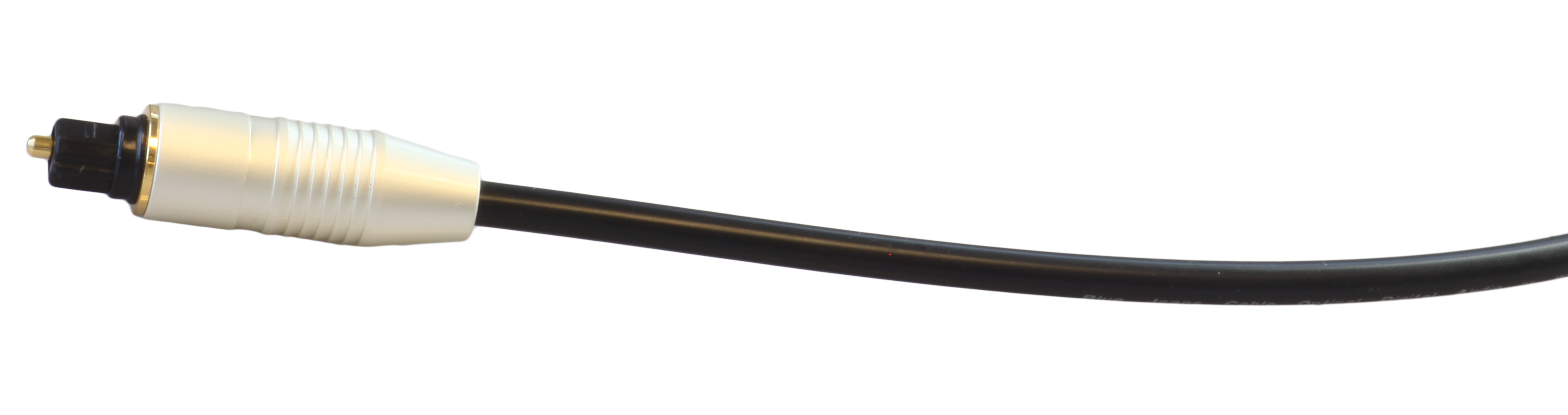
Optical:High-quality POF in a durable PVC jacket, with metal-backshelled TOSlink-style connectorsOptical Fiber for Digital Audio:
Optical digital audio cables (also known as TOSlink cables) carry exactly the same signal type as S/PDIF, but in optical fiber. Maximum effective distances vary with the gear being connected, but we've always been successful using runs up to 25 feet. When using an optical connection, bear in mind that attenuation increases rapidly with sharp bends, so tightly bending or kinking the cable may reduce effective distance.
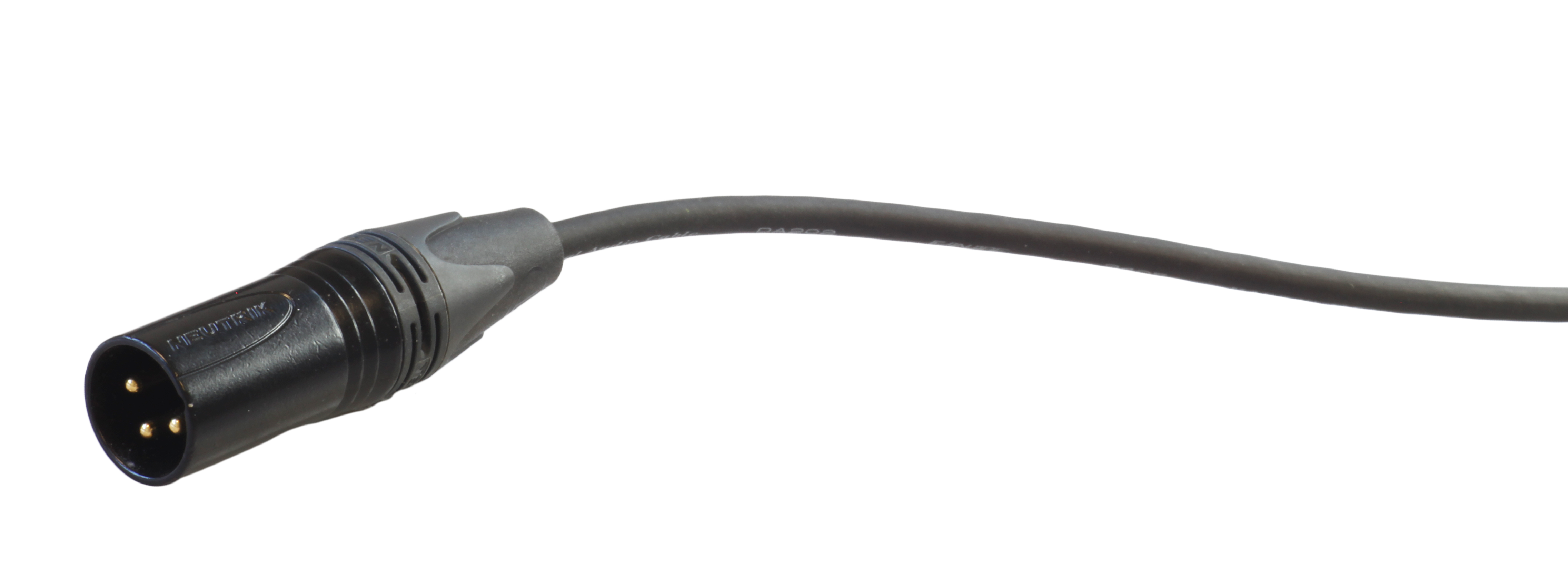
AES/EBU:Professional-grade AES/EBU cable from Canare, with excellent impedance stability and shielding, and Neutrik's best XLR connectorsBalanced Digital Audio:
AES/EBU is the dominant professional digital audio standard, designed to run on 110 ohm balanced lines. Impedance in paired cables is harder to control than in coax, and so dimensional stability is important. Our recommended cable is Canare DA202; this cable offers high flexibility and excellent impedance stability, and is shielded by a dense copper braid. DA202 is available only in blue from most vendors, but we offer it in a variety of colors.
Connectors:
Our XLR connectors are the Neutrik BXX-series. This is the best of Neutrik's XLR connectors, with gold-plated brass pins, a durable metal backshell, and Neutrik's chuck-style cable clamp/strain relief which keeps cable tension from being transmitted to the solder joints. If you need 1/4" plugs, we use Neutrik NP3X -- gold-plated contacts, and a smaller version of the same chuck-style cable clamp/strain relief.
Alternative cable stock: Belden 1800F
Alternatively, we offer Belden 1800F, a similarly flexible and well-made cable. 1800F is slightly more flexible on account of using a "french braid" type shield, and carries a CL2R rating for in-wall installation (the Canare is not in-wall rated), but is a bit costlier than the Canare.
Digital Audio in a nutshell: S/PDIF and AES/EBU cables look like conventional audio cables, but they carry digital signals which suffer return loss if characteristic impedance isn't well controlled. We use professional-quality cable and connectors, assembled here in Seattle by our experienced staff, to meet and exceed the technical requirements for digital audio transmission -- even in long runs.
Need to Know More? The "More Details" buttons under each product above will give you a rundown on what we recommend and why, as well as special options (e.g., different connectors, alternative cable stocks) we offer.



 Digital Audio Cable