



 Ethernet Cables
Spec-compliant, individually-certified Ethernet patchcords in Categories 5e, 6 and 6a
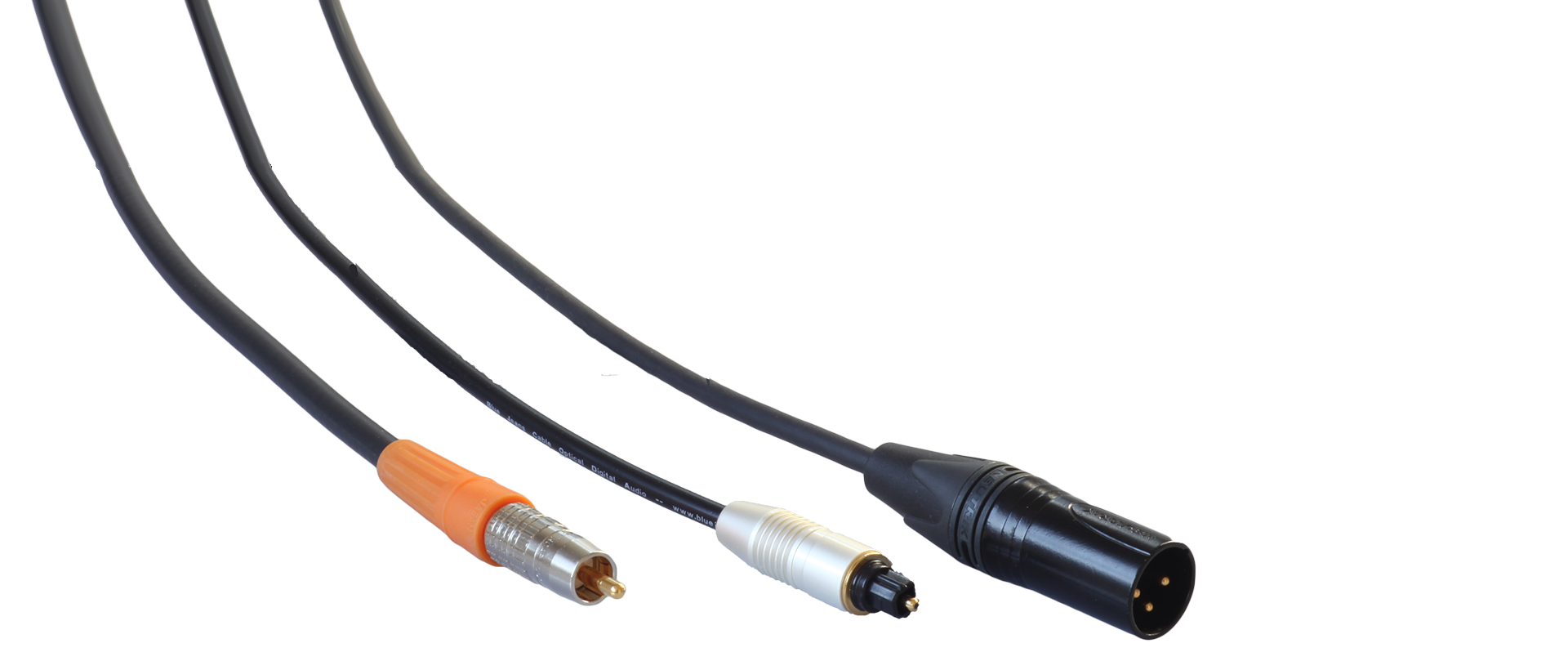
✖ Coaxial Digital Audio Cable:
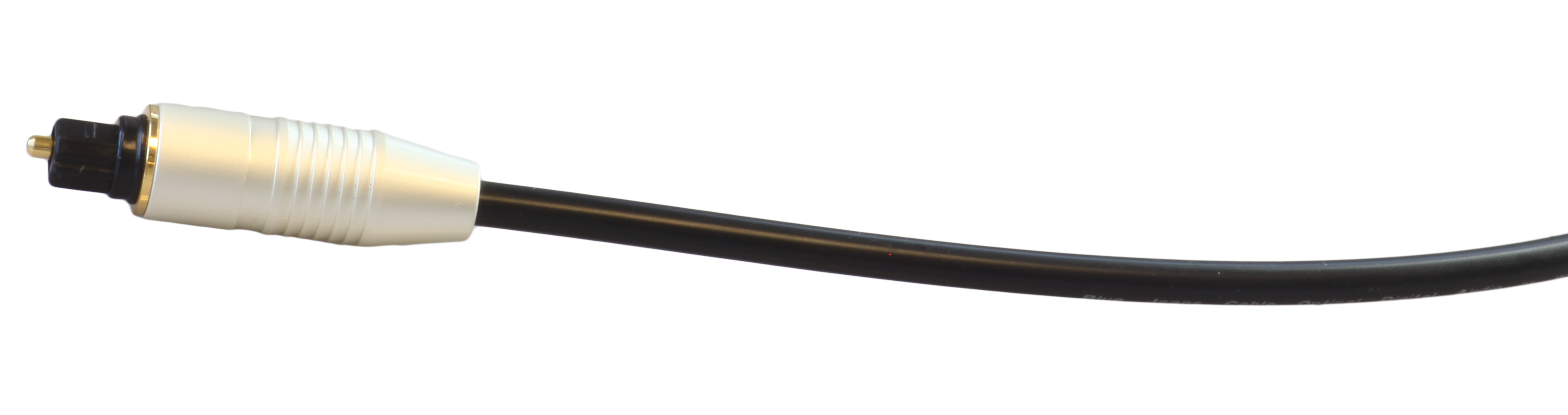
✖ Optical Digital Audio Cable:
✖ AES/EBU Cable:
Ethernet Cables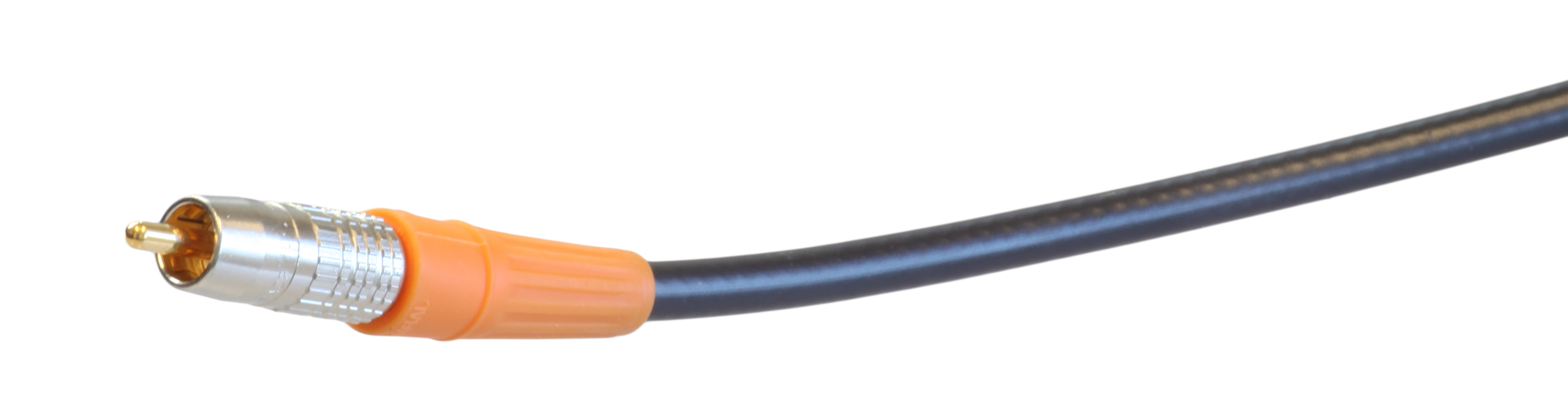
Ethernet cables have the appearance of simplicity about them, and cables labeled for various Ethernet categories are cheap and plentiful. But those cables aren't always what they are claimed to be. Something like 80% of Cat 6 and 6a cables on the consumer market -- and, as we've found from dealing with professional suppliers, quite a large percentage of those on the pro market as well -- fail to meet their stated TIA or ISO specifications. When we ran a test of 20 different Ethernet cables, we found that not only did 80% of them fail their stated specs -- 55% of them couldn't pass the much easier Cat 5e spec.
That surprises a lot of people. They ask us, "well, but aren't those cables all built to the spec?" The answer is that Cat 5e, 6 and 6a are not "build" specs where one arranges wires just so; they are performance specs, where the electrical attributes of the finished cable assembly have to meet minimum standards. For patch cords, that's principally two things: return loss and crosstalk. You can't tell by looking at a cable whether it's good or not; only by running high-frequency test sweeps through it and measuring these properties can you know if a cable is spec-compliant or not. The results depend both on the quality of the cable and connectors and on the quality of the termination work.
When we say we test our ethernet cables for spec compliance, we don't mean that we test a representative sample, or that we test the incoming materials, or anything like that. We mean that we run a full certification test, using an industry-standard Fluke tester, on every single cable we build, AND we do it using the patch cord standards, which are much tighter than the "channel" tests some people will show you for their cable. Only a clean "pass" result ships, and every cable is accompanied by a test report -- again, not a report for a batch or a spool, but the specific report generated for that specific finished cable. Do we make cables that fail? Sure! But those never leave our shop.
The standard architecture of Ethernet cable is four twisted pairs in a jacket. As one goes from 5e to 6 to 6a, the main differences have to do with physical layout, with 6 and 6a usually having a substantial spline between the pairs, and with 6a often having some sort of shield and/or boundary layer between the pairs and jacket. Our cables differ from the usual in that they use Belden's "bonded pair" technology -- the pairs, instead of being simply twisted together, are bonded together, for high consistency in impedance and intrapair skew.
Impedance stability is important in carrying digital signals, and impedance depends upon dimensional consistency throughout the cable from tip to tip. The ordinary connector for S/PDIF, the RCA plug, isn't ideal for this. Its dimensions are wrong, the jacks which contain the dielectric at the mated ends may have any sort of dielectric in them, and many RCA plugs -- especially soldered plugs with a hollow metal backshell -- depart from 75 ohm impedance along the whole length of the plug. What to do? Use a better plug.
Canare RCA plugs are a three-piece crimp design, rather than the usual solder type RCA; their construction is, in most details, more like a broadcast-quality 75 ohm BNC plug than it is like a typical RCA. Where the shield is stripped, its role is taken over by a brass metal tube of the same diameter as the shield, keeping dimensions consistent through connectorization. The internal dimensions don't change to "RCA plug" dimensions until the last possible point, meaning that the zone of impedance mismatch is kept as short as possible. And at the jack end is another great feature: a circular leaf spring grips the ground contact of the jack, with the result that the grip is solid and electrically sound, but without the over-tightness of many simple cast brass connectors; it will disengage without the risk of jack damage.
While L-4.5CHD is our recommended cable, there are others available. Belden 1694A is a similar cable to L-4.5CHD, but somewhat costlier. Belden 1505F is a high-flex cable with a stranded compacted center conductor and double braid shielding, good if you need a cable that will be regularly flexed in-use (e.g, cable strapped to an articulating mount arm) or that needs to conform to tight bends.
Most S/PDIF connections are RCA to RCA; however, some high-end and professional gear will use BNC connectors, some laserdisc players use F-connectors, and some audio cards and miniature devices use 1/8 inch plugs. Canare BNC plugs and F-connectors -- true 75 ohm plugs of the highest quality--are available on all of the cables above, and solder-on 1/8" miniplugs are available on the Belden 1505F cable. Just be sure to select the appropriate connector option when adding the cable to your shopping cart, and we'll take care of it.
 More Details:
  More Details: