Balanced Audio Cables XLR and TRS 1/4 inch cables for studio and home audio use -- both digital and analog
✖ AES/EBU Cables:
✖ Subwoofer Cable: Alternate Stocks
✖ BJC Balanced Subwoofer Cable: Canare L-4E6S
AES/EBU Cables: Twisted-pair construction, 110 ohm impedance cables for digital and analog use
AES/EBU cable -- for digital or analog
Balanced audio cable, often called "XLR" cable, traditionally is configured as a twisted shielded pair of no specific impedance. But the advent of digital audio technology meant that XLR cable needed to serve new, higher-bandwidth applications. AES/EBU cable is the answer: paired cable with a highly consistent, 110 ohm impedance for digital signals. The nice thing about this arrangement is that while it's a purpose-built digital audio cable, it's also an excellent configuration for analog use, with low capacitance and typically with high flexibility.
Canare DA202:
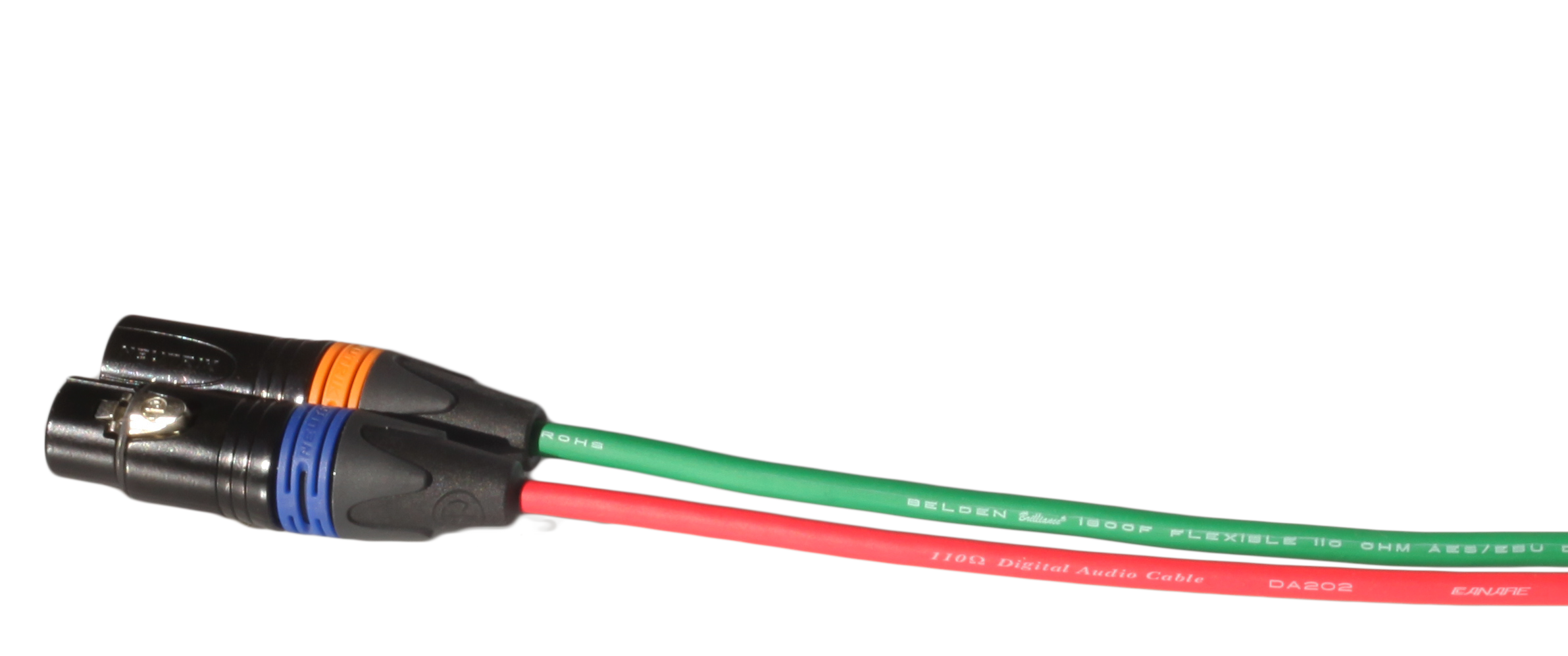
Our cable of choice is Canare DA202. This cable is compact and flexible, with a full high-coverage copper braid shield over a pair of **** -AWG conductors. It is available elsewhere only in blue jacket, but we like it so much that we've been getting Canare to produce special runs for us in multiple colors.
Belden 1800F:
Another excellent option is Belden 1800F. 1800F is a bit thicker but arguably a bit more flexible, with a "french braid" style shield which provides high coverage Our cable of choice is Canare DA202. This cable is compact and flexible, with a full high-coverage copper braid shield over a pair of **** -AWG conductors. It is available elsewhere only in blue jacket, but we like it so much that we've been getting Canare to produce special runs for us in multiple colors.
The Connectors: Neutrik BXX-series
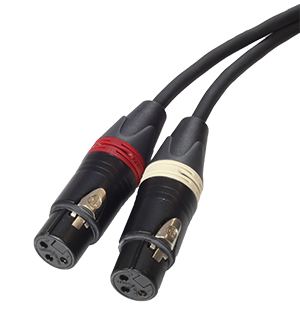
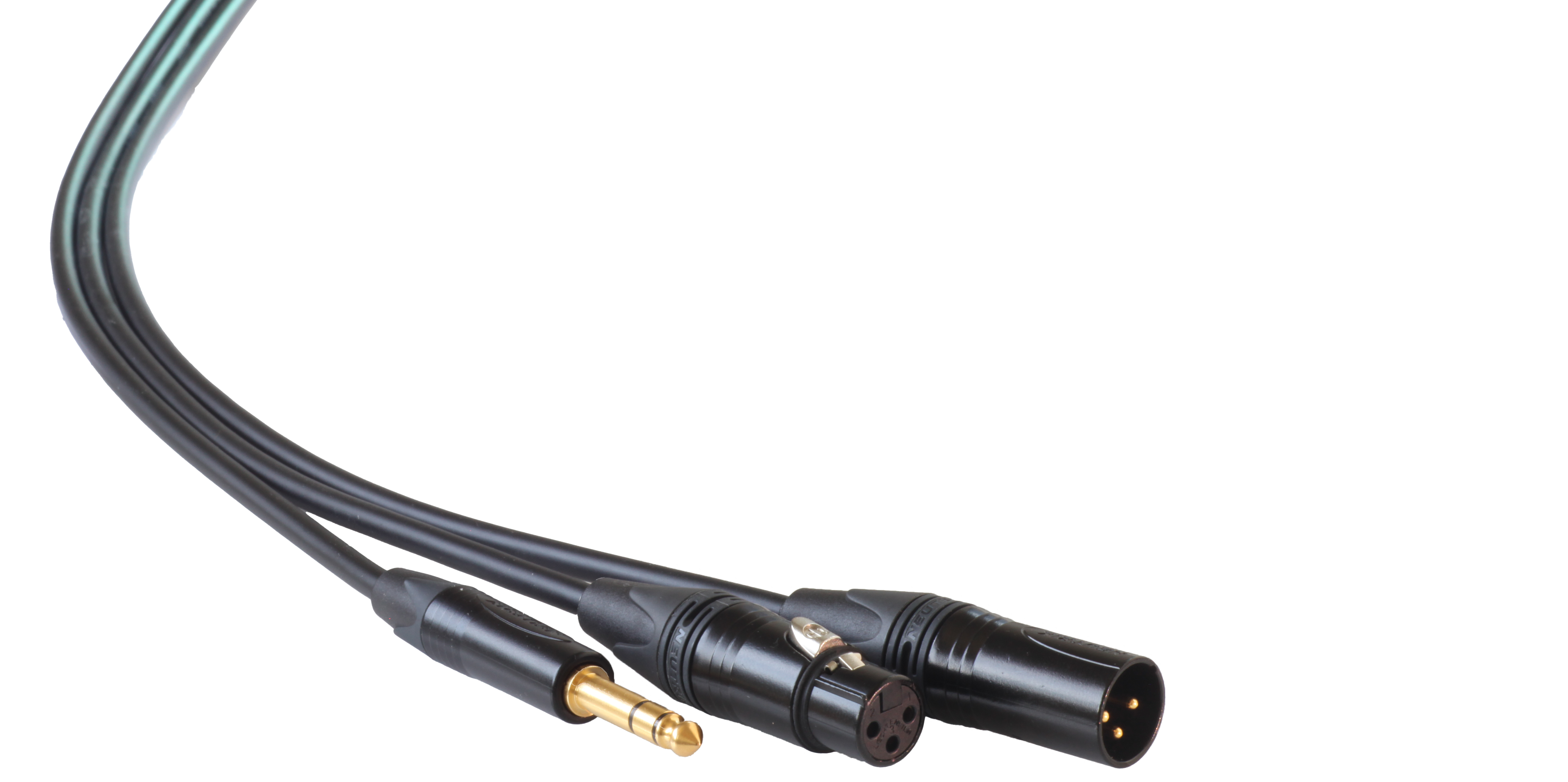
We use the Neutrik BXX series XLR connectors, with gold-plated pins, on our balanced audio cables; we prefer the Neutrik over any other, particularly because of its unique and highly effective strain relief arrangement. If you need a quarter-inch plug on either end, we use Neutrik there, as well. Both the XLRs and the quarter-inch plugs are available with any of ten different color bands -- here you see a set with red and white markings, and below is an image showing all ten colors. In addition to the color bands on the connectors, we offer the cables in multiple jacket colors -- the combination of jacket color and connector color gives one a great deal of flexibility in marking cables distinctively for easier routing and identification.
Star Quad Cables:The best for common-mode noise rejection; particularly useful for low-signal level applications like phonograph or microphone cable
While LC-2 and LC-1 are our primary recommendations, there are special circumstances which may call for something different:
Canare L-4.5CHD: for high-RFI situations
Every now and then, we have a customer who lives right next to a broadcast antenna, and for such people, RFI can be a huge problem. While many people believe, erroneously, that they live in high-RFI environments (those cell phones and wi-fi really do not generate the field strength some people imagine), people like this aren't in much doubt: they can hear the radio station while listening to other sources, because something in the signal chain is picking up and rectifying that RF. Long subwoofer cables are particularly vulnerable to this sort of noise intrusion. In such cases, a braid/foil combination shield is best, and Canare L-4.5CHD, a precision SDI cable primarily used for professional video, is perfect for such cases. It carries a 95% coverage tinned copper braid laid over a 100% coverage foil layer, and many customers have credited it with solving an RFI problem.
Canare L-2.5CHWS: for super-high flexibility
LC-2 is very flexible, but it's still a thick cable. Canare L-2.5CHWS is a much smaller cable, but still has a double-braid shield. It's ideal if you have to fit in small places (though if you've got to go through a hole, do remember that the RCA plugs may have to go through first!) or if you otherwise have need for extreme flexibility and compactness.
Belden 1505F: high flexibility
Belden 1505F is intermediate in size between L-4.5CHD and L-2.5CHWS, with a double-braid shield. It is usually available in a wider assortment of colors than L-2.5CHWS.
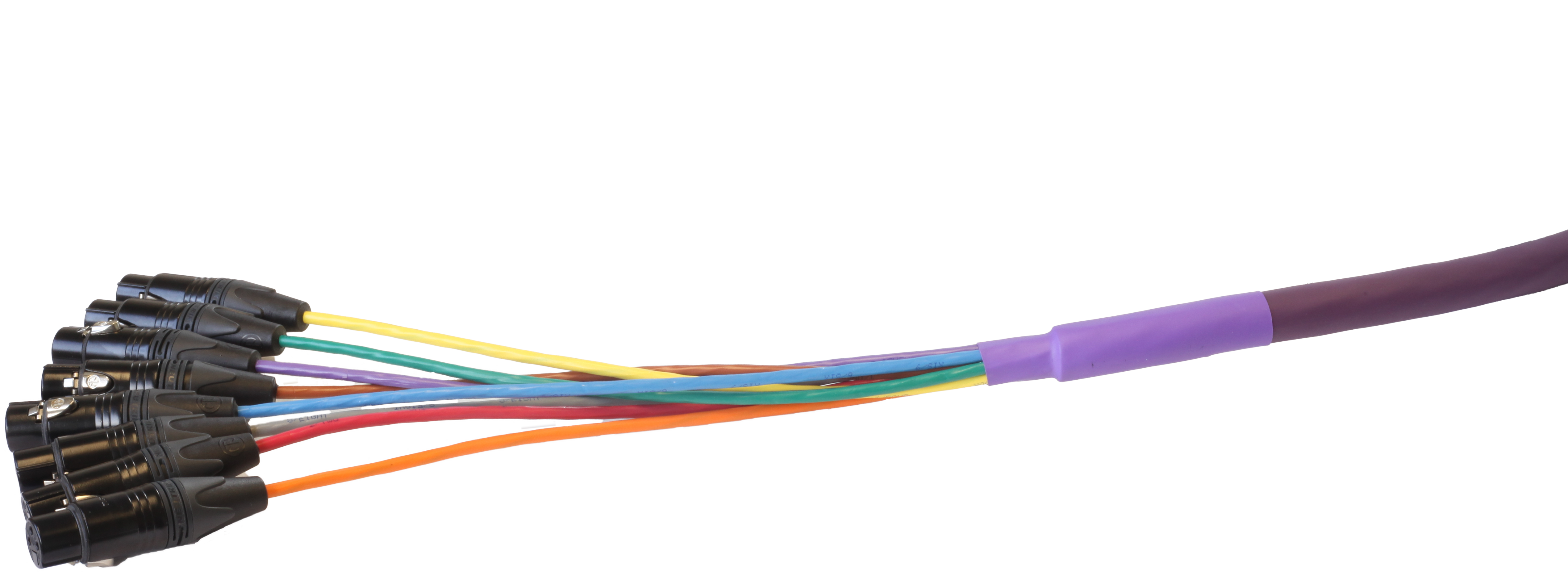
Multichannel Snake Cables:4- and 8-channel snakes
For Balanced Subwoofer Inputs: L-4E6S Star Quad XLR Cable
The performance tradeoff in XLR cables is usually between the high noise rejection of a star quad cable or the lower capacitance (hence less propensity for high-frequency rolloff) of a two-conductor cable. But in a subwoofer interconnect, where noise rejection can be extremely important and high frequencies are nowhere to be found, there's very little tradeoff: a star quad cable is ideal.
Canare L-4E6S:
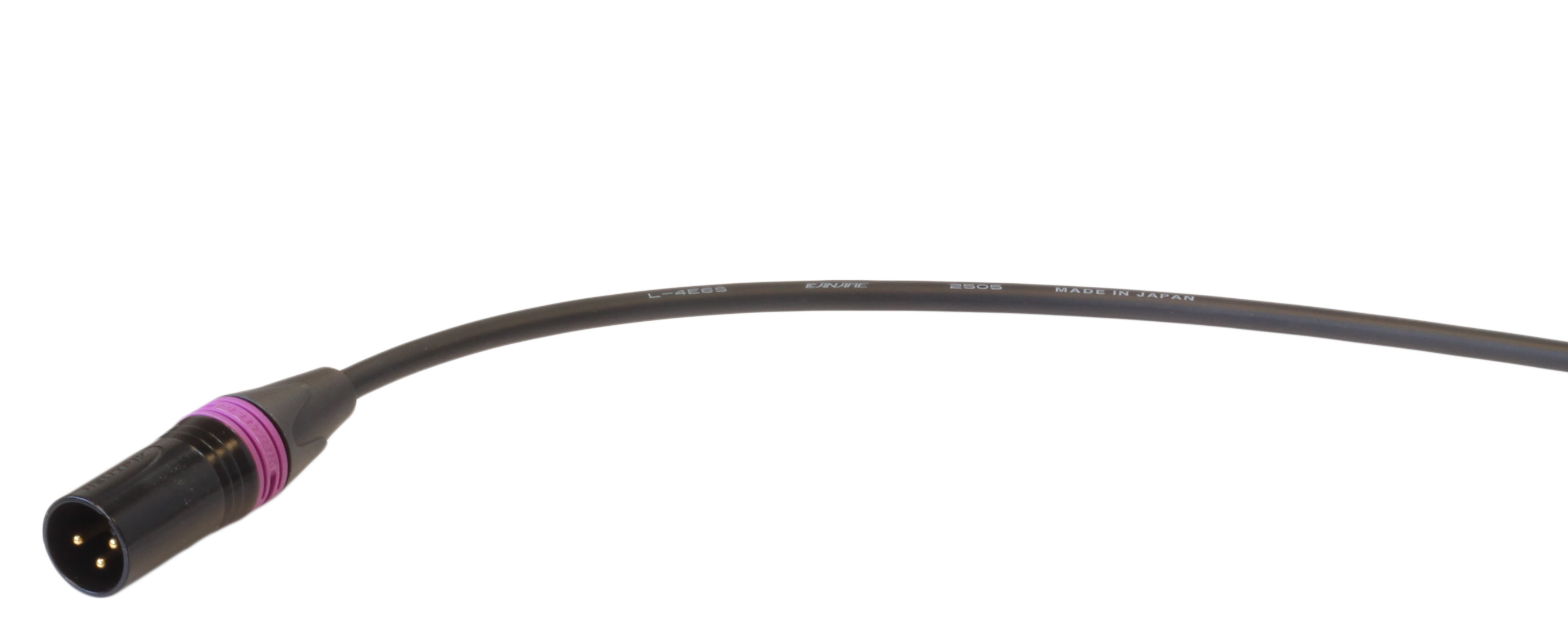
Our recommended cable for balanced subwoofer connection is Canare L-4E6S; it's a star quad, it's well shielded, and it's very flexible and easy to route. We terminate these with Neutrik BXX-series XLRs (or, when needed, Neutrik 1/4" plugs).
Balanced to Unbalanced (XLR to RCA) Cables:This product requires a bit of special discussion. See our Balanced to Unbalanced Cable page.
Balanced Audio Cable: the Basics Balanced audio cable is used with professional audio gear and with some higher-end home audio gear as well. Where unbalanced audio carries the signal on a single wire, balanced audio carries the signal on two separate wires, in opposing phases; this makes common-mode noise rejection possible, as the signal is in differential mode while induced noise will ordinarily be in common mode. How well this works depends mostly on the gear at each end of the chain, but cable quality can be a factor as well.
Need to Know More? The "More Details" buttons under each product above will give you a rundown on what we recommend and why, as well as special options (e.g., different connectors, alternative cable stocks) we offer.
A Deeper Dive: Common-Mode Noise Rejection: What it is, and the role of cable quality



 Balanced Audio Cables